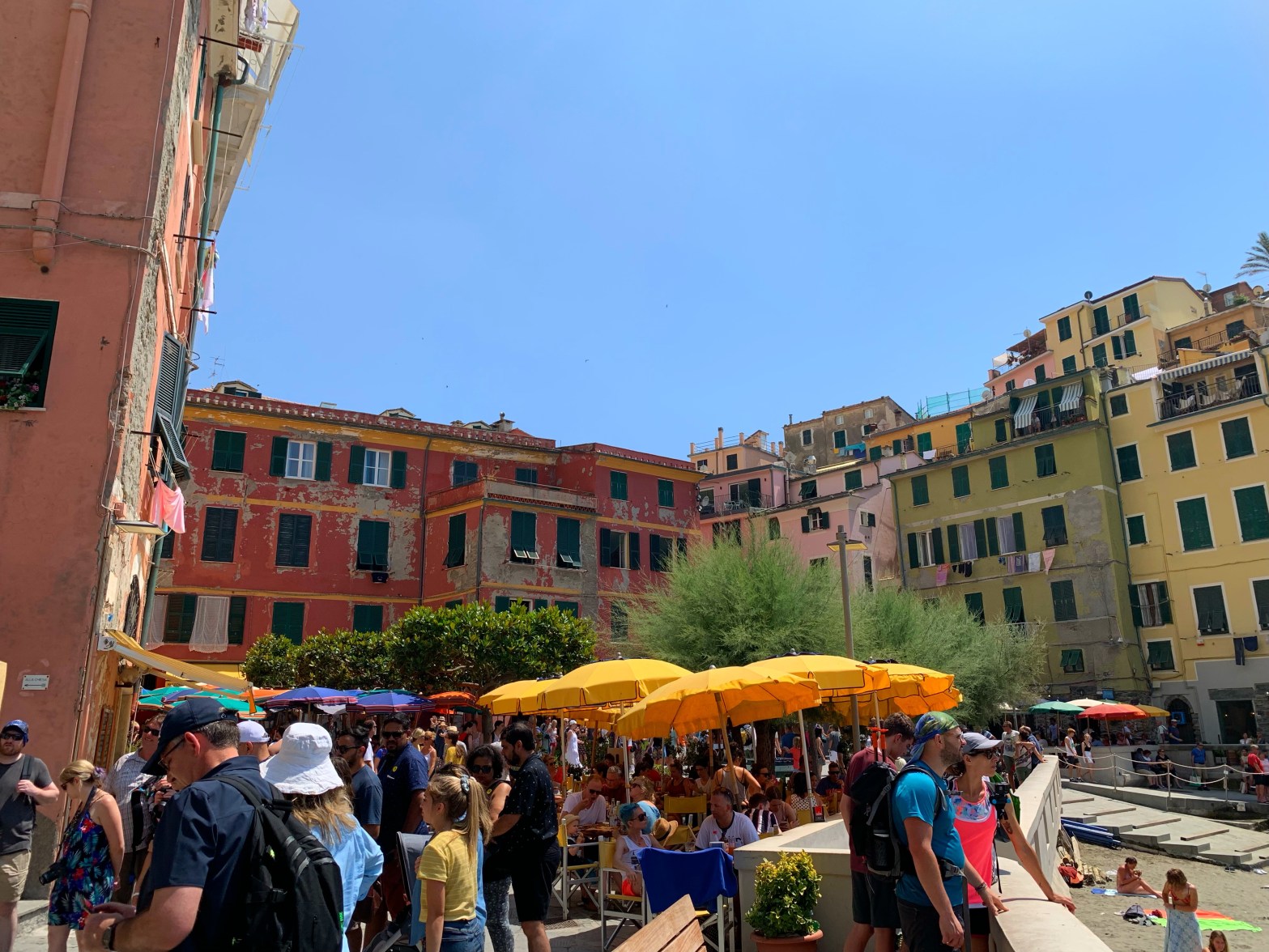
Online identity. Who you are online. It’s an interesting question to consider in this digital age. Considering who I am online led to a deep exploration of the fact that honestly, I can be anyone online. I am multiple people online. And this is okay.
Juggling an online persona on varying platforms has created versions of Michelle that I believe will be appealing or ‘attractive’ to my respective audiences. At the end of the day, the audience is what online identity always comes back to. Who do you want to present yourself to, and what is the intended response from this audience? In my own experience, this differs between social media sites. The biggest juxtaposition? My Linked in VS My Instagram/Facebook.
On LinkedIn, my aim is to present myself as a respectable young woman who is professional and a suitable work candidate for employers. Contrary to this, my Instagram allows me to explore my fun and quirky side, adding elements of emojis and exciting photos. My audience on Instagram is extended friendship groups and family, and hence, it is important for me to show the best parts of my life in order to maintain a positive image in everyone’s minds. Travel photos, delicious meals and images of my closest friends, all with vibrant filters and colours aim to reinforce the nature of my life and values- enjoying life and seeking pleasure.
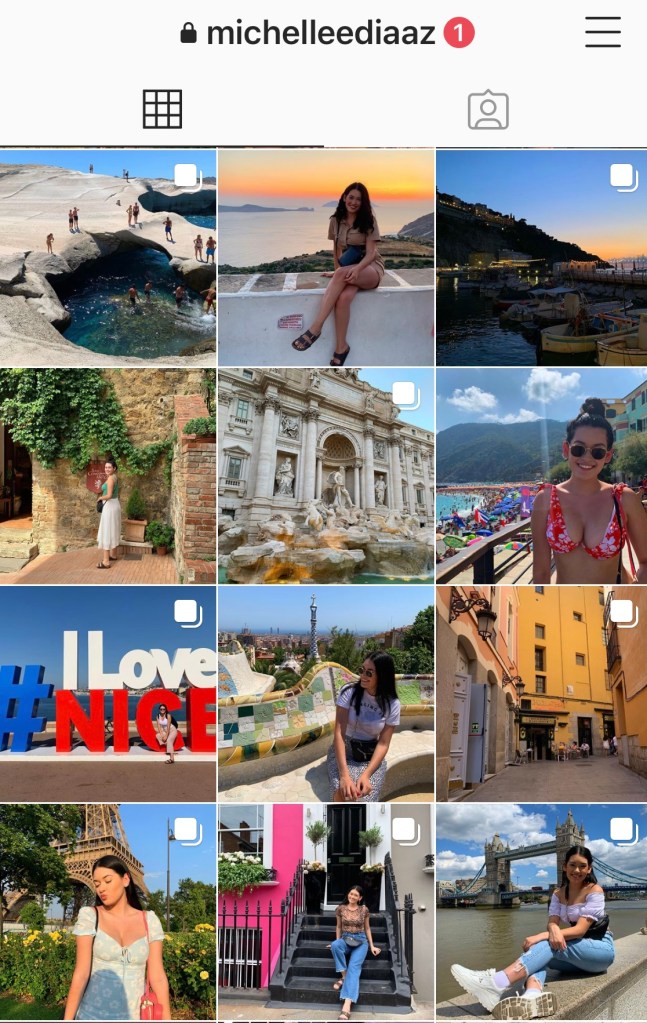
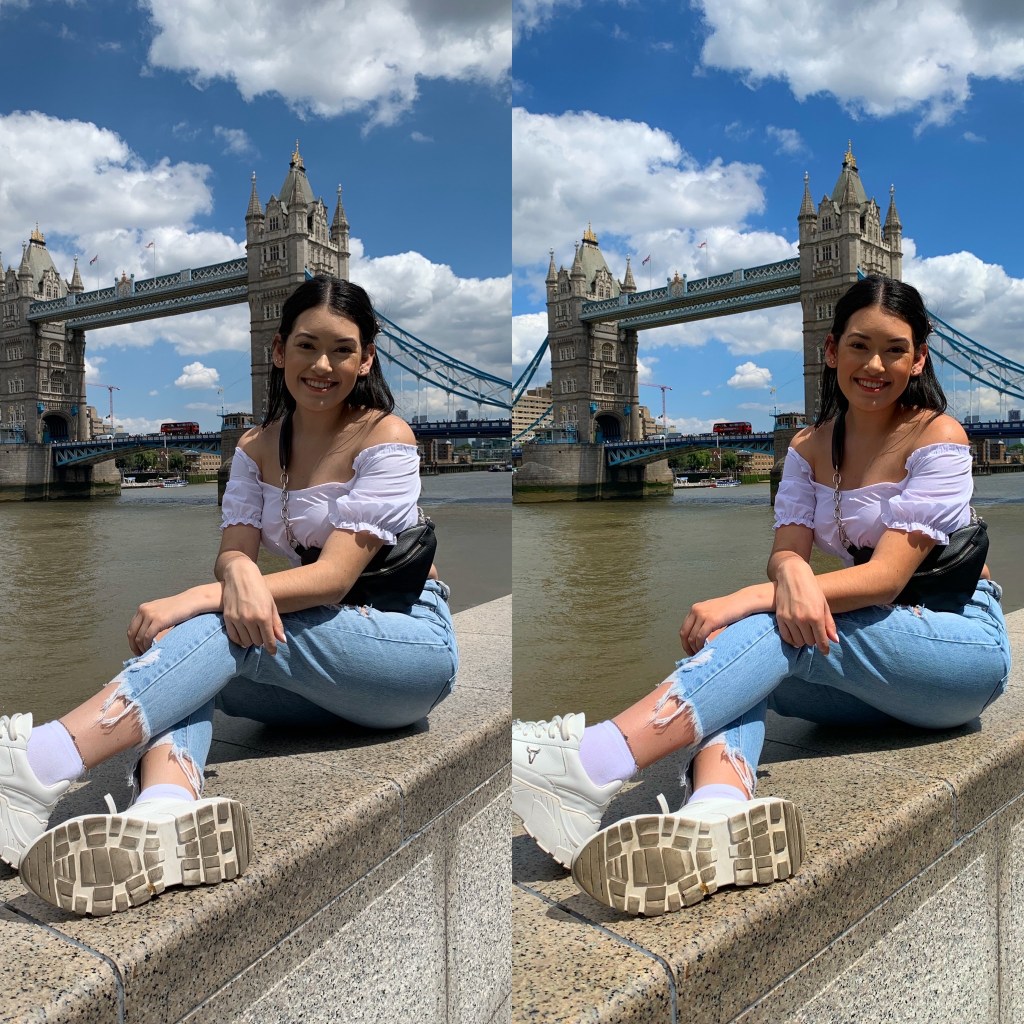
This is the best version of me and my life, just tidied up and made to look ten times more attractive- Thank you FaceTune!
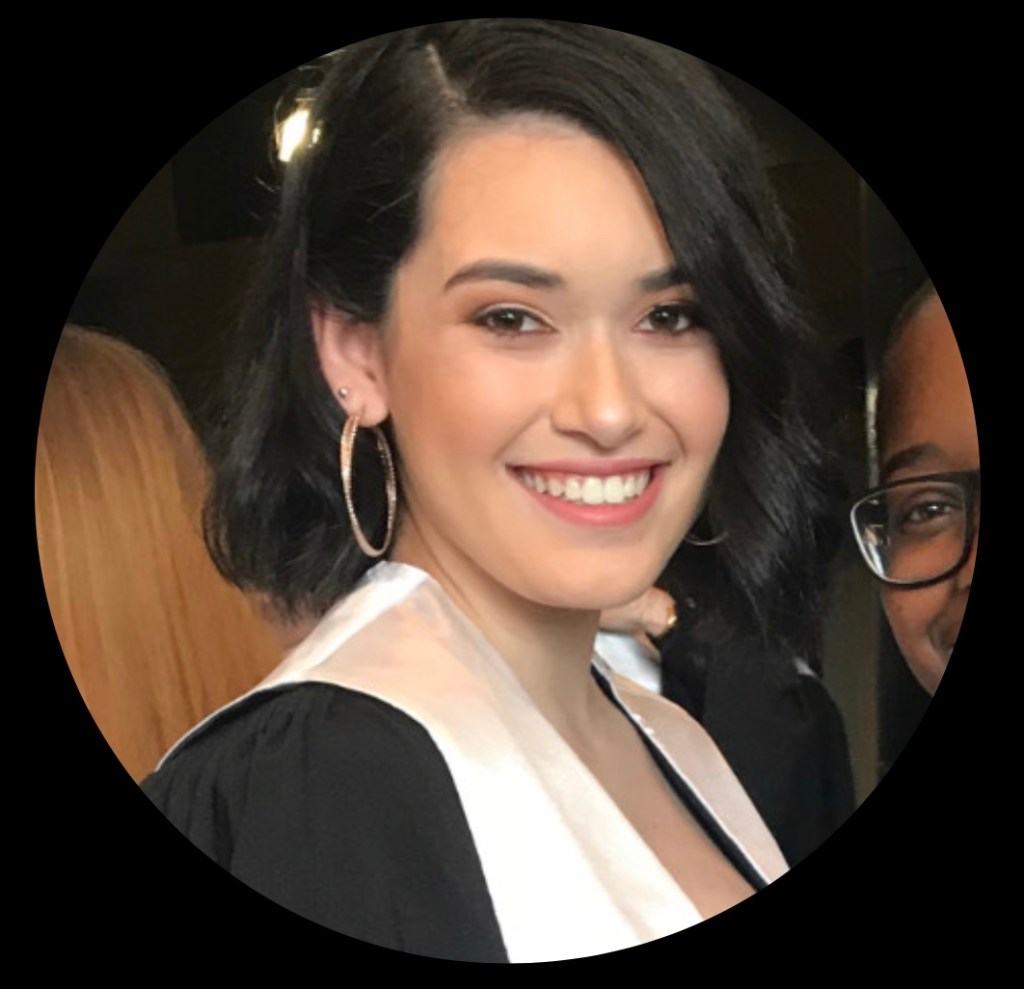
Smith and Watson (2014) claim that “users find online environments potent sites for constructing and trying out versions of self.” (pp. 77) The main tool that helps differentiate which Michelle I wish to portray? My profile picture. The precautions taken when selecting a photo for each site is entirely focused on my audience. Clothing choices, background and facial expression are all factors considered. For example, I wouldn’t set my LinkedIn or Facebook display photo as a 12am snapshot of myself double parked at the bar pulling my best duck face and peace sign. Why? Because the reality is, my audience don’t want to see that version of me. That may be my thing, but there’s no way employers at KPMG or Ernst & Young would search for my name and be impressed. And although I may have a degree, amazing experience and all the skills in the world to be adequate for a particular job, my online persona has the potential to destroy my credibility and categorise my image with all the characteristics that truly, aren’t me.
I have seen this happen many times. As a café manager, recruiting is a process I am increasingly familiar with, and I can’t stress enough how important it is to have a decent profile picture on Facebook. One particular instant stands out to me. Two girls, one job position. Both amazing availability, amazing experience and amazing interviews. The deciding factor between the two? Their Facebook profile. Whilst one had a standard profile picture of herself at a formal occasion, the other boasted a wild night on schoolies. Automatically being associated with alcohol, partying and a particular demeanour, this candidate was quickly snubbed. That’s the power of a profile picture. The power of online identity. Her chosen display of herself on a public site meant that she was instantly judged, and with her profile picture being the first thing you see on her page, it not only became our first impression, it was the only one left.
Honestly, it’s extremely interesting to me to understand why I care so much about the way I’m viewed online. Tailoring myself to what I think society expects or what my audience wants to see is something I find myself continuously making an effort to control. The truth is, my online identity is what defines how I am viewed as an individual, as an employee, as a friend. If I don’t carefully manoeuvre how I look to others online, I am at risk of incorrect portrayal or assumptions.
Smith, S and Watson, J 2014, ‘Virtually Me: A Toolbox about Online Self-Presentation’, in Poletti, A and Rak, J, Identity Technologies: Constructing the Self Online, The University of Wisconsin Press, Madison, pp. 70-95
All images produced or created by Michelle Diaz.
 Life.. One bite at a time.